
Article: Museum Glazing: Where the Reflection Goes
Museum Glazing: Where the Reflection Goes
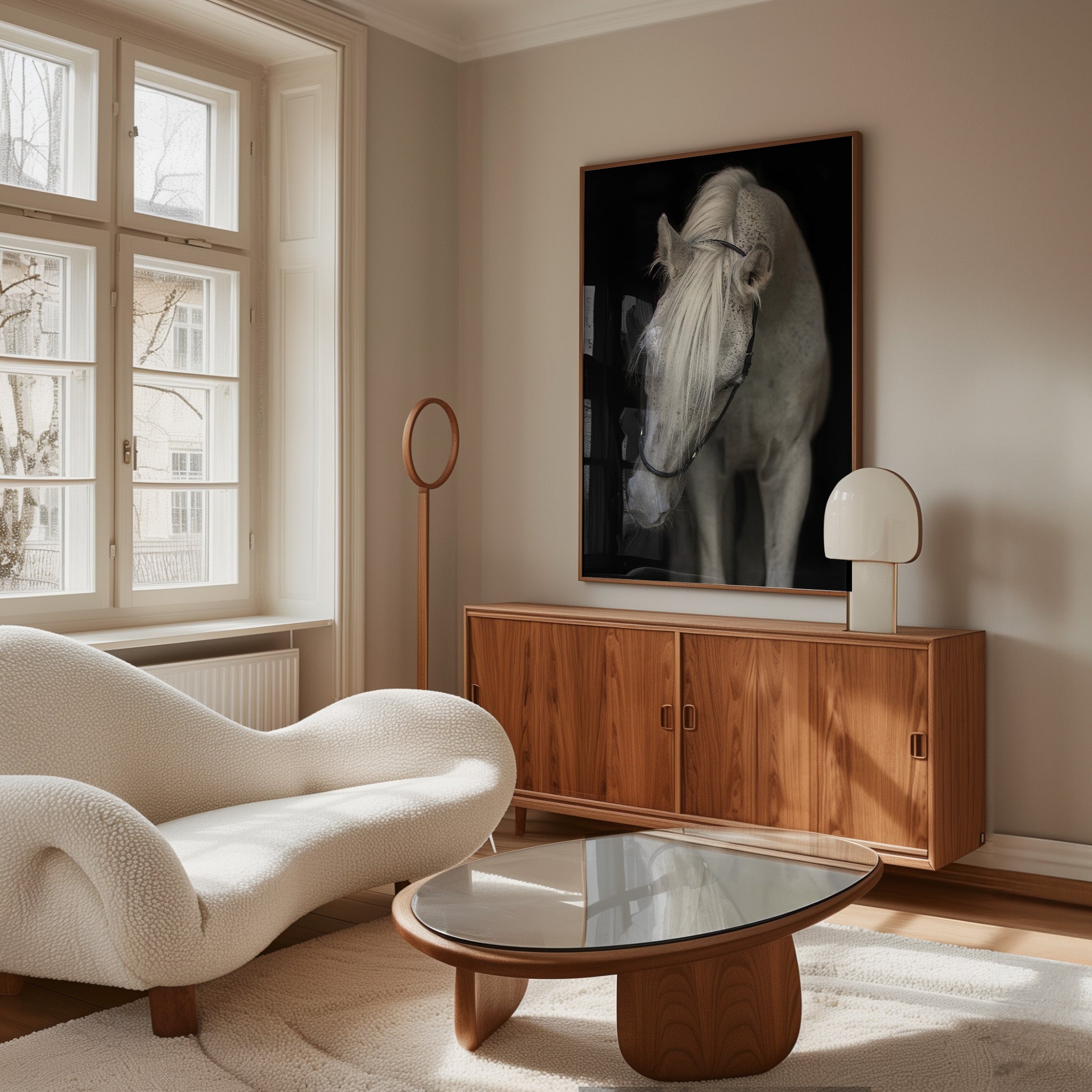
A framed artwork finds its place on the wall. Then the light shifts, and a window appears across the image. Colours look softer. A lamp or a corner of the room obscures the finer details.
Glazing deserves the same care as the frame itself. It protects the print; an anti-reflective surface helps its nuances remain visible.

Why glazing catches the room
Transparent glazing lets most light pass through. Its surface also sends a small amount back, creating a reflection.
Depending on the frame’s position, a window, a lamp or the furniture can appear over the image. The effect changes throughout the day and with the viewing angle.
Classic glazing can be unobtrusive on a wall away from direct light sources. Opposite a large window or near a lamp, reflections may become more noticeable. Museum glazing reduces them considerably without moving the artwork or rethinking the room’s lighting.

An idea borrowed from a moth’s eye
A moth’s eyes make use of the little light available at night. Their surfaces have microscopic projections that limit reflections and help light pass through.
Moth-eye technology takes its cue from this structure. A transparent film reproduces a similar surface on the glazing. The projections are too small to see, but they allow more light to enter the material.
The treatment reduces reflections while preserving the clarity of the image. It does not rely on a frosted surface, which can soften fine details.


Colours stay true to the artwork
Our museum glazing uses g.moth™, a technology developed in Japan by Geomatec.
In the manufacturer’s comparison, reflectance is approximately 0.5% when the film is applied to both sides of glass, compared with about 4% for the reference standard glass. These figures describe that particular test setup.
On the wall, the difference appears in what becomes visible again: the shades of a sky, the grain of a photograph, a detail in shadow.
Colours retain their intensity and character. A pale reflection is less likely to wash over the darker areas or weaken the contrast.
Blacks stay deep. Details stay fine. Light comes in, reflections fade.
The glazing becomes less noticeable. The eye returns to the image, its composition and its textures. A framed artwork regains the presence that reflections can conceal.

Classic or museum glazing?
Both of our glazing options are clear acrylic, a lightweight material that protects the print.
Classic glazing suits positions where reflections are limited, particularly on a wall away from direct light sources.
Museum glazing makes a noticeable difference in bright rooms, opposite windows or close to a light. The artwork is easier to appreciate from the sofa, while passing through the room or from close by.
The image matters too. A photograph with deep blacks or a composition in delicate colours can reveal the difference between the two finishes particularly well.
Protecting the print over time
Glazing provides a barrier between the paper and its surroundings. UV protection also helps slow the fading of colours.
Placement remains important. Prolonged direct sunlight, humidity and large temperature changes are best avoided, whatever the glazing.
Acrylic has a practical advantage too: at a comparable thickness, it weighs about half as much as glass and does not break in the same way. That makes a difference when handling and hanging larger frames.
Where museum glazing makes a difference
Some settings and artworks show its qualities particularly clearly:
- Opposite windows, where their outlines appear over the image.
- Near a lamp or wall light, where light obscures part of the artwork.
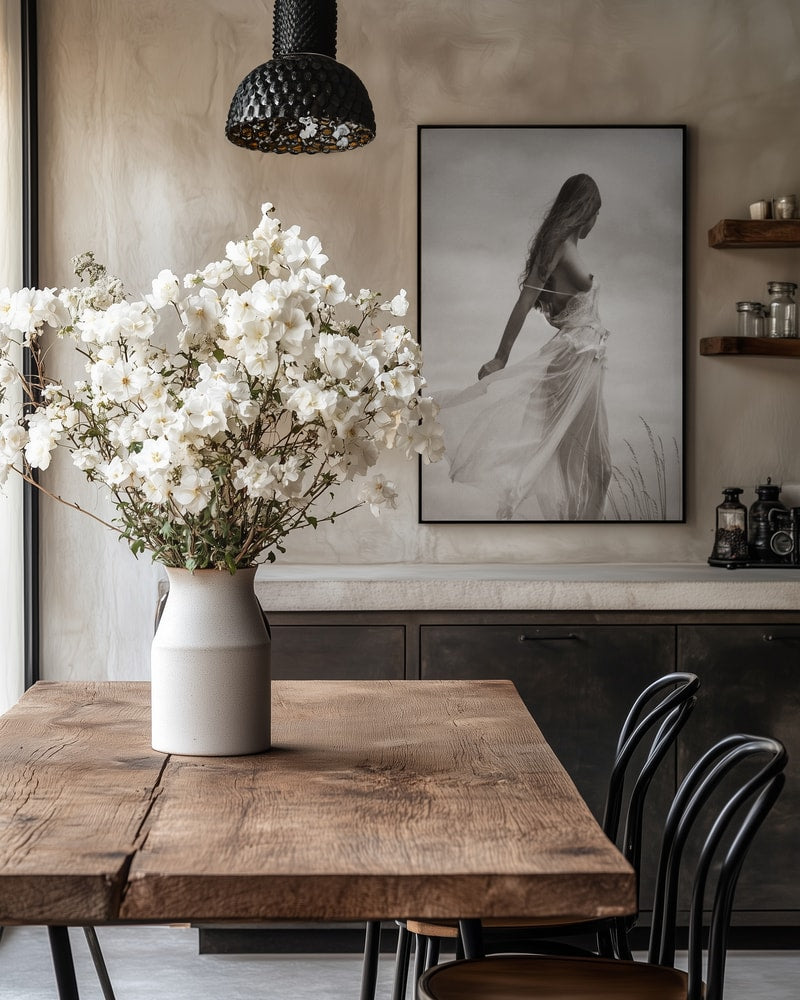
- On black-and-white photography, to preserve the subtle tones within dark areas.
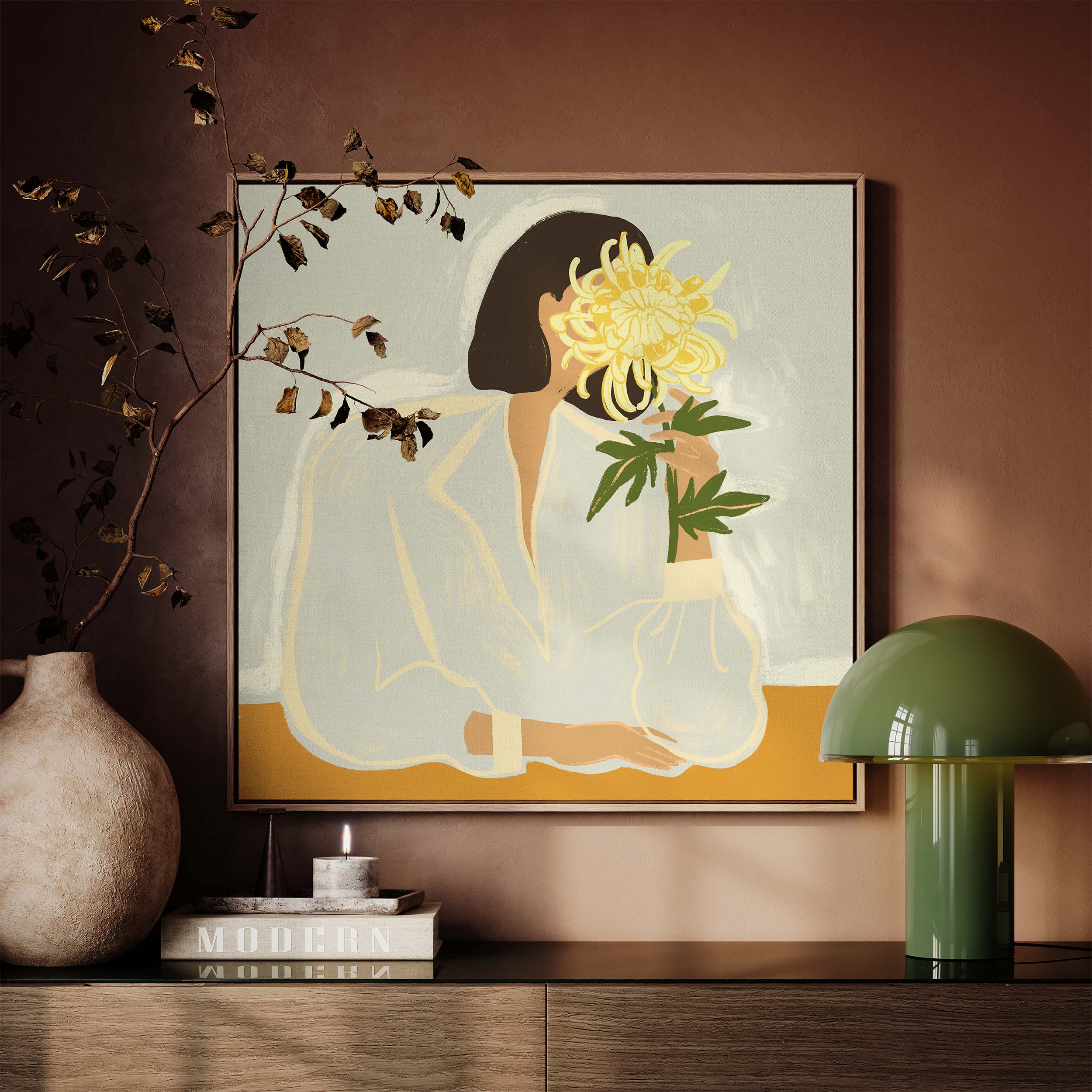
- On colour artwork, to appreciate its hues without the room’s reflection.
- On a large format, viewed from different positions.
Museum glazing is offered on our framed posters in selected sizes, subject to the delivery country.

The frame supports. The artwork takes its place.
Paper, proportions and frame colour all shape the presentation of an artwork. Glazing deserves the same attention.
As its surface becomes less visible, the image, colours and details come forward. The qualities that made the artwork worth choosing take their place on the wall.
Explore our papers and framing in Posters & Framed Posters.


